
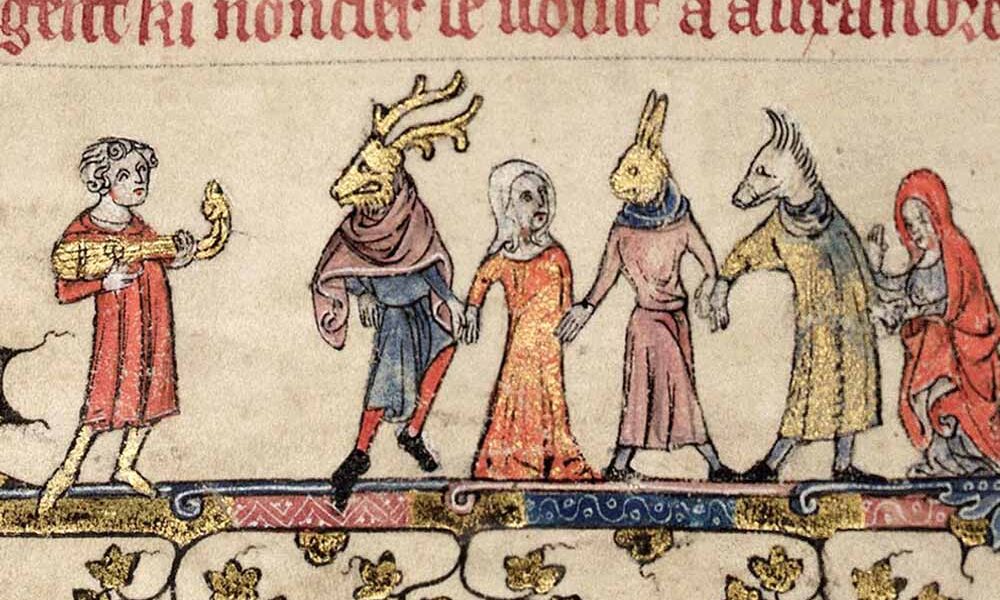
Beverley may have a stronger claim to English theatre history than many people realise.
According to historian Marcus Ramshaw, the town is connected not only to what may be the oldest surviving piece of secular drama from medieval Britain, but also to what he believes is the earliest reference to a theatrical performance anywhere in the British Isles.
Ramshaw made the case in an interview with the BBC, where he spoke about his research into a play dated to around 1300 titled The Story of the Student and the Girl.
He described it as the oldest known example of non-religious medieval drama in Britain.
The work is a comedy, and not an especially solemn one. Ramshaw said it has a broad, bawdy quality, comparing it to the kind of humour later associated with Benny Hill. At its centre is a young student pursuing a girl who rejects him.
What links it to Beverley, he argues, is the language. The dialect used in the surviving text points to East Riding or East Lincolnshire origins, placing it in this part of the world rather than further south.
Ramshaw told the BBC’s ‘Hidden East Yorkshire Podcast’ the play would most likely have been performed by minstrels, the travelling entertainers of the Middle Ages who sang, played music and told stories in courts, taverns and public spaces. Rather than existing as a fixed script in the modern sense, it would have lived as a performed work, passed on orally by people who knew their parts.
Two copies survive and are now held by the British Museum. Ramshaw said the play was originally identified by theatre historian Glynne Wickham and may well have travelled beyond Beverley, in much the same way touring theatre companies take productions from town to town now.
That connection has already been brought back to life locally. The Story of the Student and the Girl was performed in Beverley in January, giving modern audiences a chance to see a work tied to the town’s medieval past.
Dr Daniel Fountain, who played the minstrel in that performance, told the BBC: “I love that Beverley has been connected with this first play.”
She said it was exciting to help make the discovery available to local people.
Beverley’s wider links to performance and music strengthen the case that this was a town with a serious cultural life long before the modern theatre age. Beverley Minster contains more than 70 medieval carvings showing musicians playing instruments, evidence of how central music and performance were to the religious and civic world of the time.
Ramshaw says there is an even earlier link.
In a religious account from 1215, a young boy is said to have fallen from the roof of Beverley Minster after climbing up to watch a play about the resurrection. Ramshaw argues that this is the earliest recorded reference to a theatrical performance in the British Isles.
If that interpretation stands, it gives Beverley a striking place in the history of English drama, not simply as the home of an old text, but as a town where performance was already drawing crowds more than 800 years ago.
For a place often celebrated for its Minster, markets and medieval streets, it is another reminder that Beverley’s cultural history runs deeper than heritage alone. It may also have played a part in the earliest story of theatre in Britain.
About Marcus Ramshaw
Marcus Ramshaw is a historian with a strong interest in medieval Beverley and the wider history of East Yorkshire. He is a member of Queens’ College, University of Cambridge, and has become a familiar figure locally through a series of history talks at Beverley Minster on subjects including the Peasants’ Revolt, medieval merchants, St John of Beverley, and the origins of theatre and entertainment in the town.
His work has focused repeatedly on uncovering Beverley’s medieval past and bringing it to a wider public audience. Beverley Review previously reported that he was writing a book on medieval Beverley, while Minster notices from 2025 and 2026 show him leading talks and discussions based on new research and translations connected to the town’s history and literature
Feature image: Shipwrights presenting a pageant about Noah’s Ark. Early English drama could be spectacular and entertaining, as it presented biblical and other themes for a local audience.