
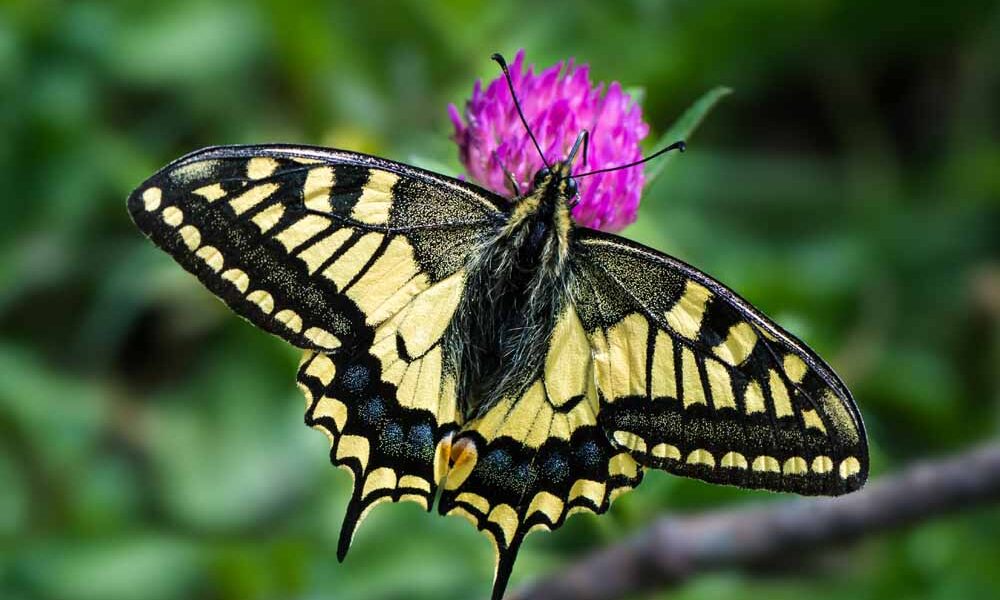
HORNSEA – A project at Hornsea Mere is aiming to bring one of Britain’s most striking butterflies back to East Yorkshire for the first time in around a century.
Work is taking place on land around the Mere, including areas managed by Yorkshire Water at Tophill Low and the nearby Wassand Estate, where conservationists are planting milk parsley, a plant essential to the life cycle of the swallowtail butterfly.
The swallowtail is the UK’s largest butterfly and is now largely confined to the Norfolk Broads. Its caterpillars depend almost entirely on milk parsley, meaning the plant has to be established before any return of the species can be considered.
The Hornsea project is focused on rebuilding that habitat. By introducing milk parsley and creating the right wetland conditions, those involved hope to lay the groundwork for the butterfly to return naturally or potentially be reintroduced in future.
Hornsea Mere is already one of Yorkshire’s most important wildlife sites, with its combination of open water, reedbeds and surrounding wetlands supporting a wide range of species. Conservation groups have long seen it as one of the few places in the region where the swallowtail could realistically thrive again if the right conditions are restored.
The work is expected to take time. Establishing the plant across a meaningful area is only the first step, and any return of the butterfly would depend on a number of factors, including habitat stability and wider environmental conditions.
Even so, the project represents a shift in ambition. Rather than simply protecting what remains, it is an attempt to restore something that has been lost from the East Yorkshire landscape for generations.
For residents, it is a reminder of the quieter environmental work happening across the area. While large-scale developments and infrastructure projects tend to dominate attention, smaller habitat schemes like this can have long-term effects on how the local landscape looks and functions.
Whether the swallowtail returns in the coming years or not, the effort to rebuild the conditions it depends on marks a step towards a richer and more varied natural environment along the East Riding coast