
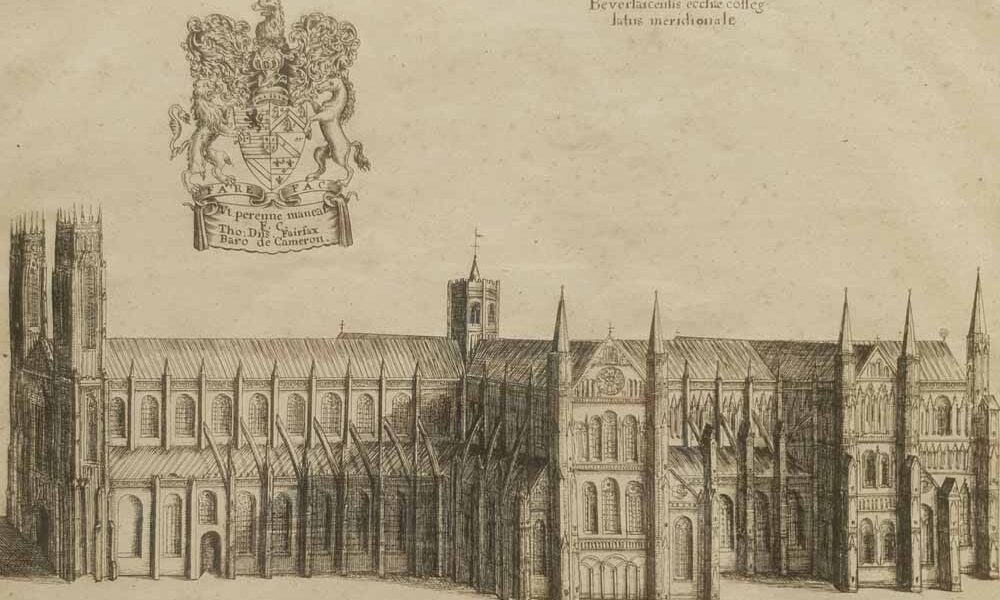
There is little surrounding landscape. The building dominates the composition, occupying the central field with minimal contextual detail. This approach reflects the conventions of seventeenth century topographical engraving, in which the primary purpose was documentation. Hatching is used to indicate shadow and depth across the stone surfaces, but there is no attempt at dramatic perspective or picturesque effect.
The historical significance of the image lies in its date. Produced in the decades following the English Civil War, it forms part of an emerging antiquarian movement concerned with recording the nation’s principal ecclesiastical buildings. Many churches had suffered damage or neglect during the upheavals of the mid seventeenth century, and engravings such as this were intended to preserve a visual record of their condition.

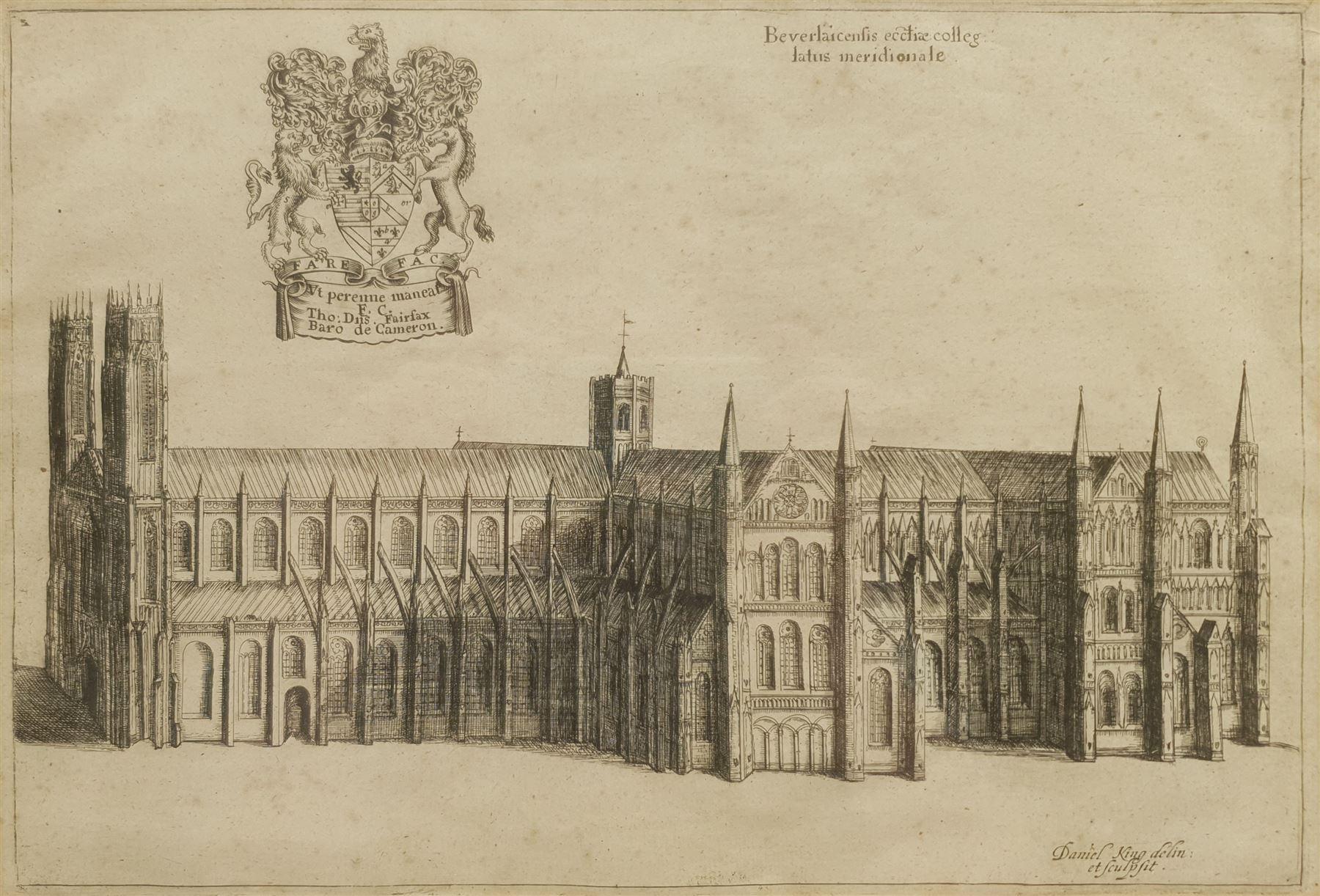
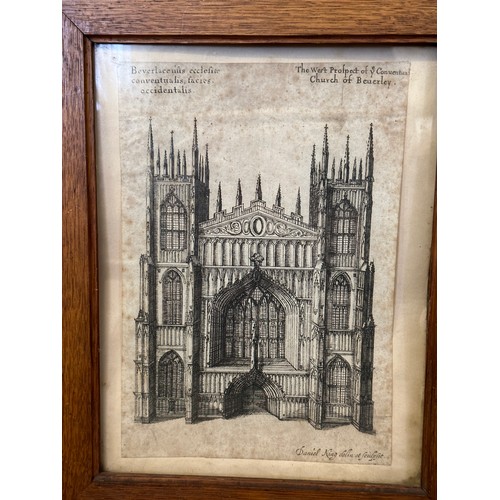
Importantly, the print predates the extensive restoration campaigns of the eighteenth and nineteenth centuries. Later interventions altered and repaired elements of the Minster’s exterior. King’s engraving therefore provides a valuable benchmark for historians studying changes to towers, window tracery and external detailing. Even where minor inaccuracies may exist, it remains the earliest visual reference point for the building’s post medieval appearance.
Daniel King was active during the 1650s and early 1660s and produced engraved views of cathedrals, abbeys and castles across England and Wales. While not regarded as the most artistically refined engraver of his period, his work is valued for its documentary quality, particularly where no earlier images survive.
In the case of Beverley, this engraving marks the beginning of the town’s recorded visual history. It establishes the Minster as the defining architectural presence and provides a mid seventeenth century snapshot of its scale and massing. As a historical source, its importance rests not in artistic flourish but in its status as the oldest recorded image of Beverley.