
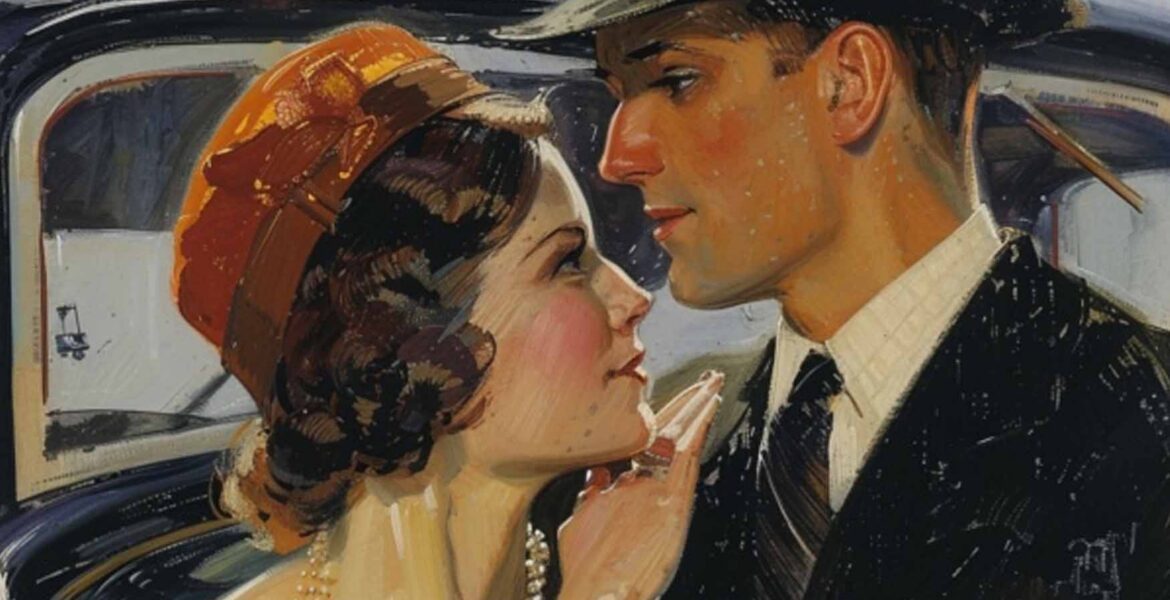
There was a time when Beverley took its pleasures with greater formality. Clothes were part of it, certainly, but so was the wider sense that an evening out should carry a little ceremony. People dressed with the venue in mind. Dinner, dancing, the races or the theatre each came with their own social codes and expectations. A night in town was not simply another appointment in the diary. It stood slightly apart from ordinary life.
Beverley once possessed the sort of social architecture that encouraged such habits. Long before the age of casual dining and pub refurbs, it had assembly rooms, hotel dining rooms, civic parlours and race meetings, all belonging to an older world of public sociability. Assemblies were being held in the town by the early eighteenth century, before more substantial Assembly Rooms opened in 1763. They existed for dancing, music and polite company, and they suggest a town with enough confidence in its own social life to build for display as well as convenience.

Beverley was never simply a market town in the modest sense sometimes implied by the phrase. It was a county town, a place of clergy, trade, land, professional life and local consequence. In the eighteenth and nineteenth centuries, respectability was not a private condition. It had to be shown. One was seen in the street, at church, at dinner, at concerts, at subscription events and on the racecourse. Dress formed part of that public language. To be properly turned out was not vanity alone. It signalled seriousness, self-command and a sense that certain occasions deserved ceremony.
So too on the Westwood. Beverley Racecourse, with its long history, offered one of the town’s most enduring theatres of appearance. Race days were not only sporting occasions. They were social ones in the fullest sense: gatherings structured by rank, display and observation. The horses mattered, naturally, but so did the lawns, the stands, the greetings, the small rituals of arrival and recognition. The day was lived in public.
By the twentieth century some of the stiffness had eased, though the instinct persisted. Fred Elwell’s scenes of Beverley life are useful here, not because they show grandeur, but because they preserve the supporting world behind it: kitchens, service, preparation, the labour that made respectable leisure possible. In his work on the Beverley Arms, one sees less the glamour of dinner than its machinery. Yet that too belonged to the culture of occasion. Dining out, or dining properly, rested on an accepted structure of effort, both visible and invisible.
Even later, into the era of concert halls, clubs and organised socials, Beverley retained traces of this formality. Dances, recitals, suppers and whist drives asked people to make an effort, not always in black tie, but in a spirit far removed from today’s studied informality. Leisure carried expectations. One did not simply turn up. One presented oneself.
Much of that world has gone, and not all of it deserves mourning. The old codes could be rigid, self-conscious and exclusionary. Modern life is easier in many respects, and mercifully less burdened by unnecessary social performance. Yet some loss is hard to deny. What disappeared was not elegance alone, but a whole structure of occasion. An evening out once implied a distinction between the ordinary and the memorable. It asked for a small act of transformation.
In Beverley, that older instinct has not vanished so much as changed its costume. Over the past two decades the town has acquired a serious dining reputation. Its restaurant scene has expanded markedly, with a stronger range of independent cafés, gastropubs and food-led venues than it once possessed. Beverley is now often spoken of, with some justification, as the food capital of East Yorkshire: a place people travel to not only for its architecture and shops, but to eat.
This newer culture is more relaxed than the old one, but it answers to some of the same desires. People still come into town for a good table, a considered menu, a room with atmosphere, an evening that feels set apart from routine. The forms have altered. The appetite for occasion has not. If earlier Beverley marked its social life with gloves, jackets and polished shoes, modern Beverley does so with bookings, wine lists and the quiet competition for the best places to eat.
The Assembly Rooms have gone and much else with them. Yet the town still bears the imprint of that earlier world, in its buildings, in its rhythms, in its occasional flashes of ceremony. One still sees it at weddings, on Ladies’ Day, at school proms, or simply in the sight of people stepping out as though the evening ought to matter.
Beverley no longer dresses for dinner in the old sense, because England no longer does. But it has retained something of the older conviction that public life is improved by occasion. That people need places in which to gather, dine, observe, celebrate and briefly become more formal versions of themselves.
The dress codes have faded. The instinct remains.