
BEVERLEY – On Hengate, a short walk from Beverley’s centre, stands one of the most recognisable buildings in the town. The White Horse Inn, known to most local people simply as Nellie’s, has been part of Beverley life for centuries. The building leans gently toward the street behind its old brick frontage. Inside are narrow passages, small rooms, worn wooden floors and gas lamps that glow above dark timber.
Many visitors describe the experience of walking into Nellie’s as stepping back in time. For Beverley people the feeling is familiarity. It belongs to the everyday life of the town and almost everyone has a connection with it.
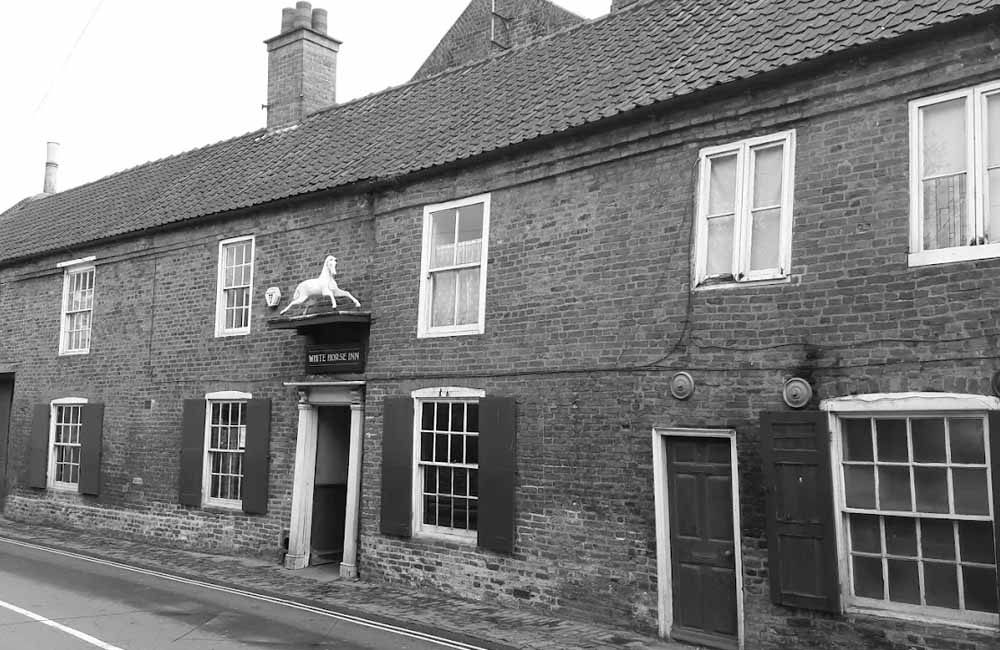
The White Horse appears in local historical records by the later seventeenth century and the structure itself is older still. Historic England identifies the building as medieval in origin, later refaced in the late seventeenth century. The interior retains a remarkable quantity of nineteenth century pub fittings that have survived while similar interiors elsewhere disappeared.
Across Beverley many buildings have been rebuilt or dramatically altered. The White Horse has changed far less. For several hundred years it has remained recognisably itself.
The earliest White Horse
The precise origins of the inn are uncertain, which is typical for buildings of this age. Its obvious however, that the structure developed gradually over centuries rather than being built at a single moment.
Historic England identifies the core structure as medieval. The earliest building was likely timber framed, a common construction method in Beverley during that period. Later brickwork was added to the front during the seventeenth century.
The slightly curved frontage visible along Hengate today probably reflects this earlier timber structure beneath the brick face. The shape suggests the building followed the line of an older frame rather than being constructed entirely from new materials.
By the later seventeenth century the White Horse was already known locally. One long repeated tradition claims the antiquarian Sir William Dugdale stayed at the inn in 1666 while collecting genealogical information about Yorkshire families. Whether the story is entirely accurate or not, it shows how long the pub has occupied a place in Beverley’s historical imagination.
During this period Beverley was an active market town and inns played an essential role in the movement of people and goods. Records from the late seventeenth century suggest the town’s inns collectively provided more than 180 guest beds and stabling for several hundred horses.
The White Horse formed part of that network.
A substantial coaching inn
By the early eighteenth century the White Horse had developed into a significant inn property.
A Corporation lease from 1732 describes two connected buildings containing nine ground floor rooms and twelve chambers. The site also included three thatched stables, yards and gardens extending toward Silverlace Lane.
The description reveals the scale of the establishment. This was not a small drinking house but a busy coaching inn designed to accommodate travellers arriving with horses and luggage.
Beverley’s position as a regional market centre meant people regularly passed through the town. Farmers attended markets, merchants transported goods and travellers moved between Yorkshire towns.
Inns such as the White Horse provided food, accommodation and stable space for those journeys.
Its location on Hengate placed it close to the commercial centre of Beverley while still offering easy access to routes entering the town.
The nineteenth century inn
During the nineteenth century the White Horse remained a working part of Beverley’s commercial life.
The 1851 census lists Frances Burrell, a widow aged fifty six, living at the inn with members of her family as well as staff. The presence of servants suggests the establishment continued to operate on a substantial scale.
A later Corporation lease from 1862 describes the property as an inn with stables, a brewhouse, a saddler’s shop and associated yards.
These details illustrate how closely the business remained connected to horse travel. Saddlers, stable yards and brewhouses were all typical features of coaching inns.
The Burrell family held the lease of the White Horse for many years during the nineteenth century under ownership of St Mary’s Church.
Their tenure coincided with one of Beverley’s more colourful political episodes. During the infamous bribery scandal surrounding the 1868 parliamentary election, Francis Burrell of the White Horse was among those called before investigators examining the distribution of money to voters.
The scale of the scandal eventually led to Beverley losing its parliamentary representation for a period of years.
The Collinson family
The identity of the pub today owes much to the Collinson family.
By the late nineteenth century the White Horse had passed into their hands. Francis Collinson, a saddler by trade, took over the inn while continuing his work supplying equipment for horses.
Trade directories from the 1890s list him as both saddler and victualler at the White Horse.
In 1927 he purchased the building from St Mary’s Church, bringing the property fully into family ownership.
The Collinson household was large and closely involved in running the pub. Several members of the family worked there across the early twentieth century.
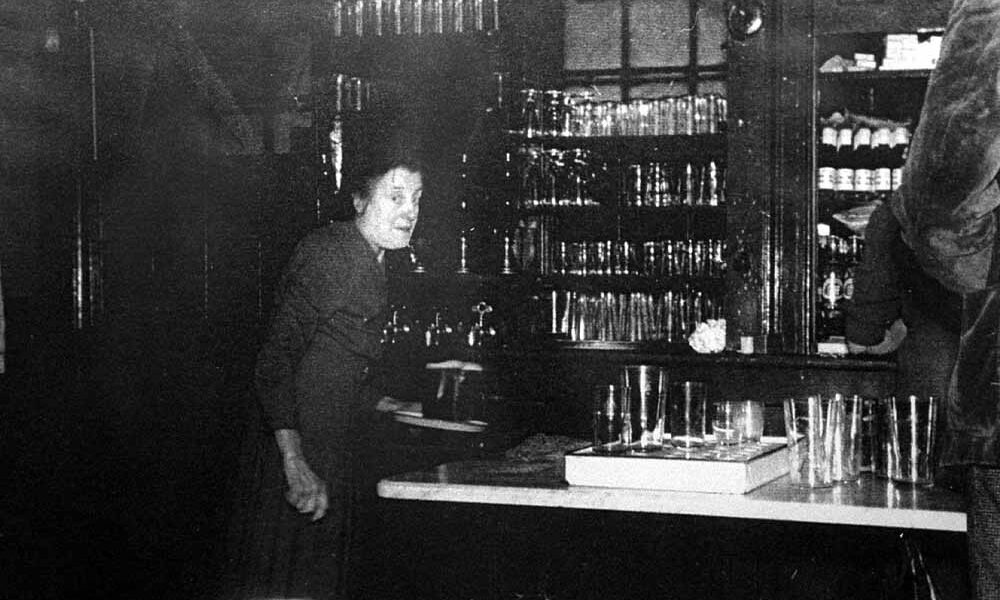
Among them was Nellie Collinson, the figure whose name would eventually become permanently attached to the building.
Nellie and the character of the pub
By the mid twentieth century Nellie Collinson had become the central presence at the White Horse.
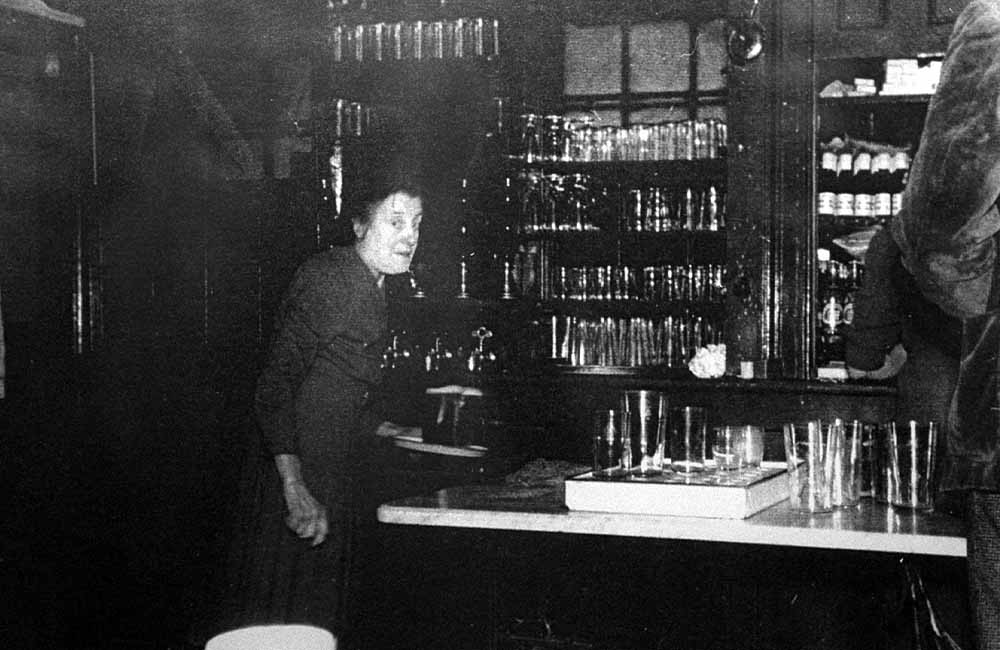
She ran the pub for many years and became a well known figure among Beverley customers. Over time people began referring to the pub simply as Nellie’s.
The nickname spread naturally and eventually replaced the formal name in everyday conversation.
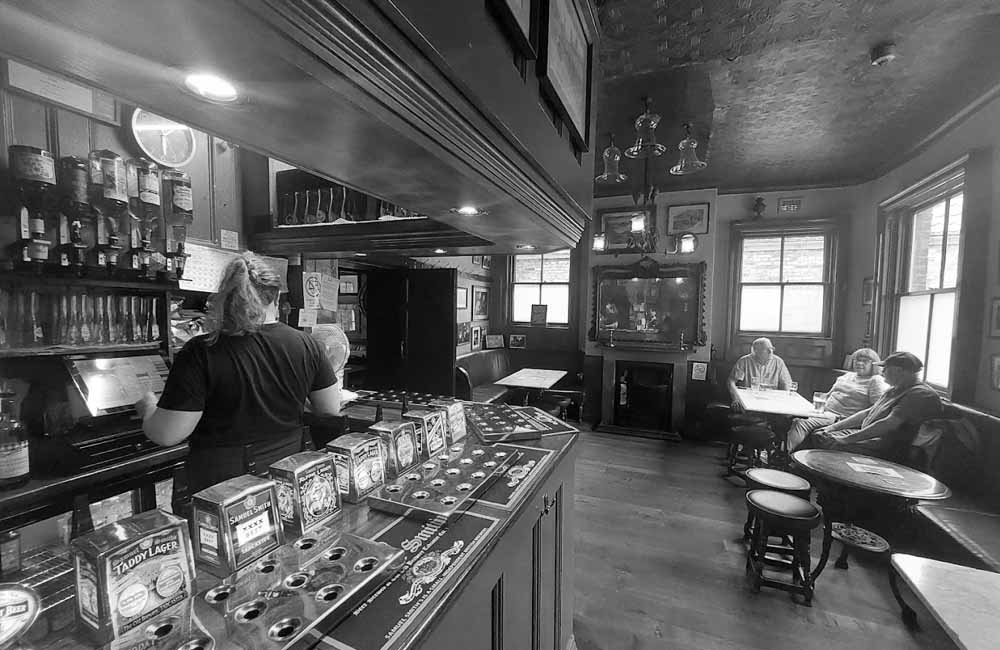
Stories about Nellie still circulate locally. She was known for running the pub firmly and according to her own rules. In earlier years there was no traditional bar counter and beer was served directly from barrels into jugs.
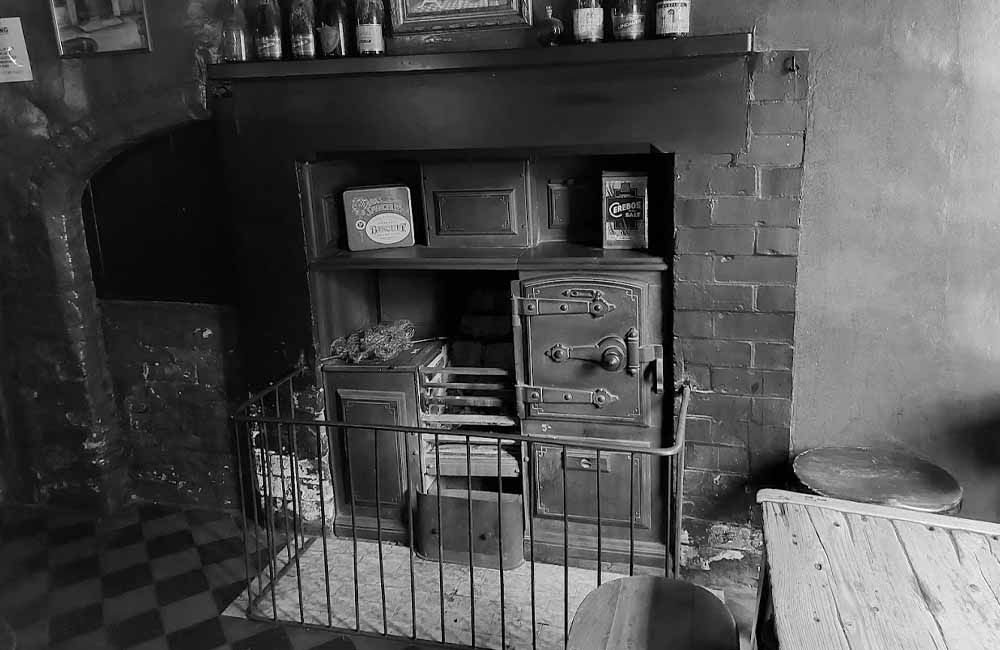
Customers moved between a series of small rooms rather than gathering around a single bar area.
Those arrangements were not designed as historical curiosities. They were simply the way the pub had always operated.
A remarkable interior
One of the most striking features of Nellie’s is the survival of its historic interior.
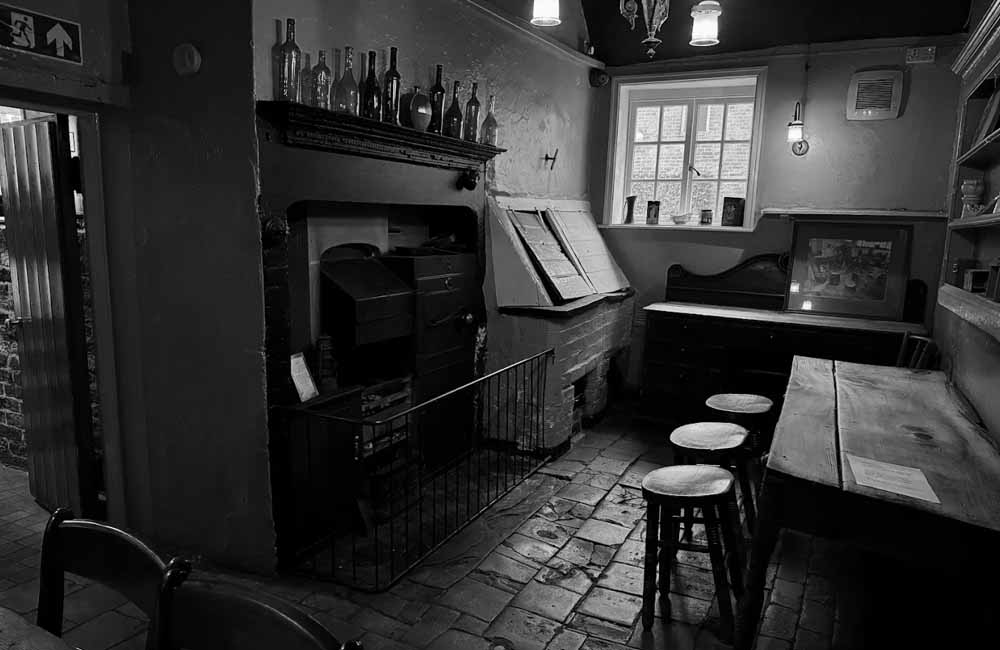
Historic England describes the pub as containing a remarkable quantity of nineteenth century fixtures and fittings. Gas lighting remains in use and wooden partitions divide the building into a collection of small rooms.
Old fireplaces, fixed seating and worn floors all contribute to the atmosphere.
Visitors enter through a stone flagged passage before finding themselves in a maze of snug rooms.
Many pubs removed similar features during twentieth century refurbishments. The White Horse largely avoided such changes and retained much of its earlier character.
The result is one of the most intact historic pub interiors in Britain.
Narrow escapes and modern ownership
The survival of the building was not guaranteed.
During the twentieth century plans were once considered to widen Hengate as part of road improvements. At one stage the White Horse faced possible demolition.
Local opposition helped prevent the proposal and the building remained.
In 1976 the Collinson family sold the pub to Samuel Smith’s Brewery of Tadcaster. The brewery installed a bar counter and made some alterations but much of the historic interior survived.
The pub continues to operate under Samuel Smith’s ownership today.
Beverley’s network of coaching inns
The White Horse was only one part of a larger network of inns that served Beverley during the coaching era.
Market towns depended heavily on such establishments. Travellers arriving with horses required accommodation for themselves and their animals.
Several inns operated within a short distance of one another around Beverley’s centre.
The Sun Inn
Often described as the oldest surviving pub in Beverley.
The Tiger Inn
Located close to the main commercial streets.
The Blue Bell
Another long established public house serving the town.
The Dog and Duck
Part of the wider network of inns serving travellers.
Together these establishments supported Beverley’s role as a market town and transport hub within the East Riding.
Architectural layers of the building
Although Nellie’s appears at first glance to be a single old structure, the building actually reflects several periods of development.
- Medieval core structure
A timber framed building likely formed the earliest phase.
- Seventeenth century refacing
Brickwork was added to the frontage during the late seventeenth century.
- Eighteenth century expansion
Coaching inn facilities such as stables and yards developed during this period.
- Nineteenth century fittings
Much of the interior woodwork, seating and room layout dates from this era.
- Twentieth century alterations
Later changes were relatively minor and did not fundamentally alter the building.
Landlords of the White Horse
Several individuals appear in surviving records connected with the inn.
The Burrell family
The White Horse was operated by the Burrell family during much of the nineteenth century while the property itself remained owned by St Mary’s Church. Frances Burrell appears in the 1851 census running the inn with family members and servants. Other members of the Burrell family, including Francis Burrell, are associated with the pub in mid nineteenth century records and lease documents.
Francis Collinson
The pub passed into the hands of Francis Collinson in the late nineteenth century. A saddler by trade, he combined his business with running the inn. Trade directories of the period list him as both saddler and victualler at the White Horse.
The Collinson family
The pub remained in Collinson family ownership for many decades. In 1927 Francis Collinson purchased the property outright from St Mary’s Church. Several members of the large Collinson family were involved in running the pub through the early twentieth century.
Nellie Collinson
During the mid twentieth century Nellie Collinson became the best known landlady of the White Horse. Her long tenure and strong personality led local people to refer to the pub simply as Nellie’s, a name that has remained ever since.
Samuel Smith’s Brewery
The White Horse was sold to Samuel Smith’s Brewery of Tadcaster in 1976. The brewery continues to own and operate the pub today.
Still Beverley’s Nellie’s
After centuries of use the building continues to fulfil the same purpose it always has. It offers a place where people gather.
Visitors may arrive seeking a glimpse of history, but local people come for something simpler. A drink, a conversation and the comfort of a place that has always been there.
Officially the building remains The White Horse Inn.
In Beverley it will probably always be Nellie’s.
Timeline
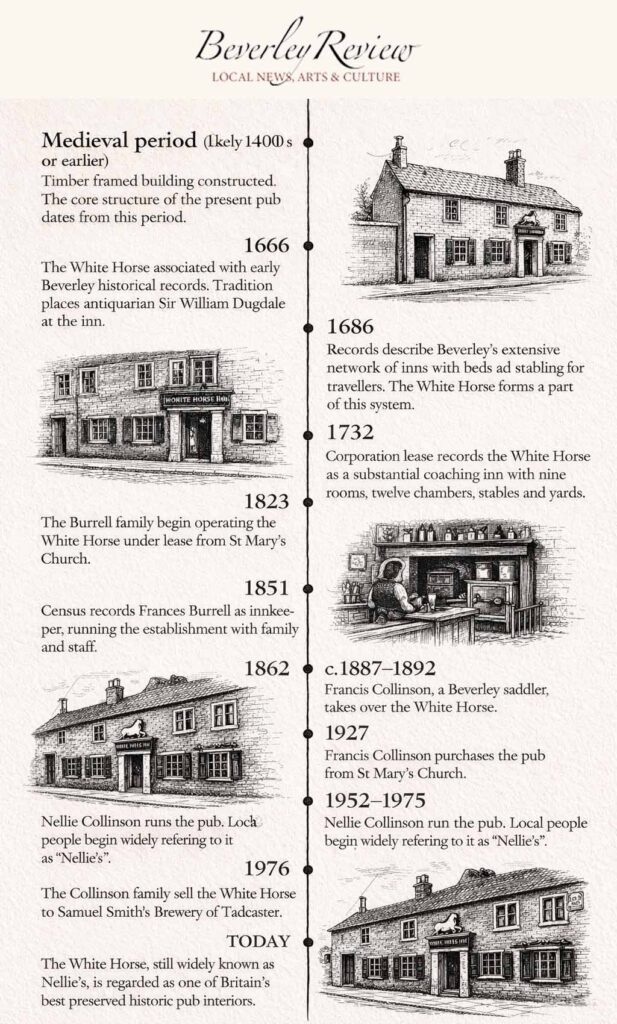
Feature photo credit: Beverley Yesteryear / Samual Smiths Brewery
What an interesting article. I love the pub and it’s strict rules and such a great place to meet up.
Absolutely! Thanks for commenting.
Some further comments about Nellie’s stewardship:
The room that served as the bar was off-limits to women (and occasionally to young men)’ so they had to order drinks by knocking on the hatch in the corridor.
Nellie was happy for you to drink for a few minutes after legal hours; she just asked you to hide your glass if the police came round. She (and the police) didn’t seem too bothered about underage drinkers, as long as they were well-behaved.
Nigel, really very much appreciate your additional insights thanks.
Very interesting. One thing though what is the story of the horse above the entrance? My grandchildren love to point it out as we pass anywhere near it.
Thats one for us to look into
Been in Nellies, it was amazing, and still gas lighting, just loved the atmosphere,so cosy and warm. Hope it never changes.
It really is a wonderful and unique place. Thanks for reading.
You haven’t mentioned Nellie’s sisters who helped run the pub. They were there in my day, around the 60’s.
Hi Paul – Like your piece on the White Horse. It brought back some fine memories. As a player with Beverley RUFC in the early 70s and during my time as a young reporter on the Beverley Guardian, Miss Nellie’s was a popular haunt. Beer was often served on a marble top table in the main bar where there was usually a plastic bowl of hot water. I say ‘hot’ but as the evening wore on it became rather cool. In this bowl, Miss Nellie would dip a used pint glass, presumably to clean before serving to the next customer. By 10.30pm, we used to say the strongest pint in the pub was in that bowl.
Hi Mike… I can only imagine the fun you must have had in those heady days. Thanks for the comment – one in Nellies soon!
love this article , I used to go to Nellies in the 70’s with my father in law , before leaving for Canada , brought back so many happy memories and how much Sam Smith’s pint went down so well . Very interesting facts on the past on Nellies
Thanks for reading and commenting.
Miss Nellie was a diamond and the boss. Back in the mid 60s before I departed for each new school term my parents would meet with friends in the small front room with the iron fireplace and the sloping table ( due to constantly being moved in and out of position to gain access to the gas light on the wall). I was 11 ~ 14 at the time and after two or 3 fizzy orange juices and before leaving “ Miss Nellie” always gave me half a crown and a sloppy kiss. Very fond memories of the iconic establishment and I always visit on my very infrequent visits to the town where I grew up.
What a fantastic memory thank you for commenting
‘The White Horse’, above the front entrance, could do with a good clean. Sadly, very dirty now.
Interesting. Love Reading about the white horse. My ancestors were the burrells. Frances burrells daughter, Sarah, married the son of the landlady of the sun Inn, Bartholomew stamford. Interesting that another Francis is connected with the pub. Will check now if any connection. Sarah and bartholomew are buried next to the minster facing the sun Inn.