
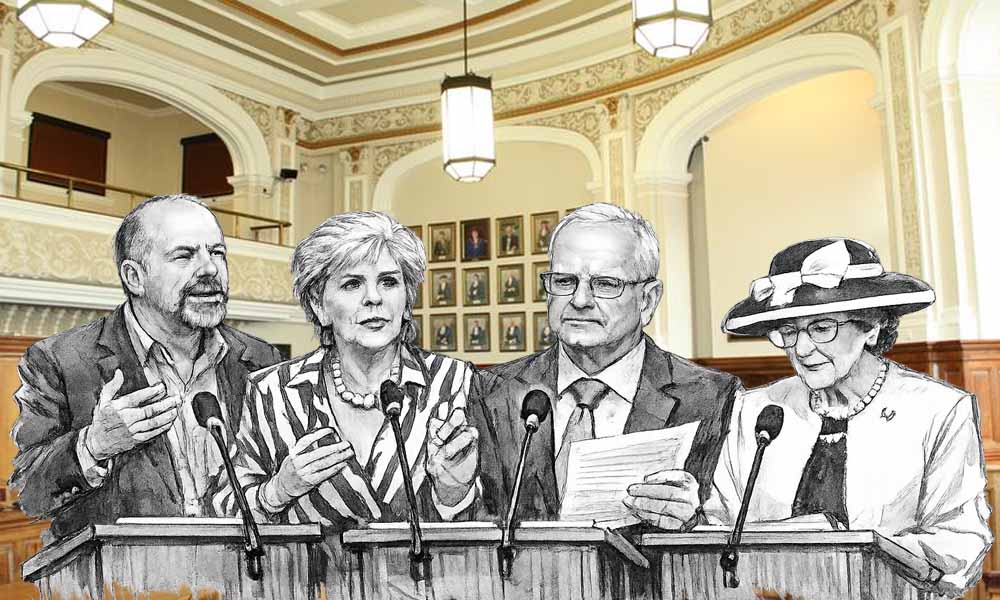
BEVERLEY – East Riding of Yorkshire Council has approved its budget for 2026/27, with cross-party backing reflecting broad acceptance that the authority is operating under tightening financial constraints.
Conservatives, Labour, Liberal Democrats and the official Independent group each indicated support for the package during the debate, though all acknowledged the scale of the pressures facing local government.
Reform UK remained undecided until shortly before the vote, with its leader telling the chamber the group had not settled on a position until moments before the vote. No party brought forward an alternative budget, despite having the procedural option to do so.
Council Leader Councillor Anne Handley set out the administration’s case for the budget and the accompanying 4.99 per cent council tax rise, framing both as necessary responses to sustained reductions in central government funding and rising demand for services. The council estimates that under the Government’s revised “fair funding” proposals it stands to lose around £32 million a year in core grant once the changes are fully implemented, with a cumulative reduction of approximately £67 million over the next three years. This comes alongside rising demand pressures in adult social care, children’s services and SEND provision, which together account for a substantial share of the council’s annual revenue budget.
Councillor Handley and senior officers have argued that the funding formula does not adequately reflect the additional costs of delivering services across a large, predominantly rural area.
The East Riding covers more than 2,400 square kilometres, with widely dispersed communities and an ageing population, factors which the council says drive higher costs in areas such as domiciliary care, home-to-school transport and special educational needs transport.
The council’s position is that without increasing council tax to the maximum permitted 4.99 per cent, the council would face sharper reductions in services or a more rapid depletion of reserves. Officers have warned in budget papers that reserves have already been significantly drawn down in recent years and cannot be relied upon to support recurring spending pressures.
Labour Group Leader Councillor Steve Galant supported the budget but argued that the council also needs to strengthen its long-term revenue base rather than relying primarily on annual tax rises and savings programmes. He called for a stronger emphasis on housebuilding, suggesting that increasing the housing stock would expand the local tax base over time and generate additional council tax revenue. Labour did not bring forward an alternative budget.
Liberal Democrat Group Leader Councillor Denis Healy reiterated concerns about the scale and permanence of the funding reductions facing the council and warned that residents face what he described as a “double blow” of declining government support and local financial plans reliant on transformation programmes that carry delivery risk. He argued that councillors should be clearer with residents about the real-world consequences of the budget, stating that behind the size of the budget papers are decisions that will affect classrooms, care services and neighbourhoods across the county.
Councillor Healy said the council’s Medium Term Financial Plan, which extends to 2029/30, points to a lasting shift in how local government is funded rather than a short-term dip. He highlighted the projected £67 million reduction in funding over the next three years and the estimated permanent annual loss of around £32 million thereafter, warning that this scale of reduction would inevitably place sustained pressure on service levels. He also raised concerns about disparities in SEND funding, pointing to the comparatively low level of funding per child in the East Riding compared with both the national average and some urban authorities, and warned that underfunding support for children with additional needs risks creating greater pressures for schools and health services in the longer term.
While acknowledging that the council has produced a legally balanced budget for 2026/27, Councillor Healy questioned the sustainability of the approach being taken, arguing that reliance on one-off measures, asset disposals and ambitious transformation savings leaves little margin for error if projected efficiencies fail to materialise. Despite these reservations, he confirmed that the Liberal Democrat group supported the budget on the basis of the council’s legal duty to set a balanced budget, describing his party’s position as responsible but vigilant about the risks in the years ahead.
Councillor Barbara Jefferson spoke for the official Independent group, which is formally aligned with the Conservative administration and holds cabinet responsibility. She supported the overall direction of the budget, emphasising the need to maintain essential services while managing within what all sides described as a constrained financial settlement.
Closing the debate for the Conservatives, Cllr Nigel Wilkinson said not increaseing council tax would also deprive the council of future incremental funding as circumstances could potentially get even worse. He challenged other leaders who had painted a gloomier the required picture of the councils finances and compared East Riding to other authorities who where either unable to balance their books or considering bankruptcy. Cllr Wilkinson acknowledge Labour’s desire for more council houses but said the cost of borrowing made it uneconomical
The budget was passed without amendments. The recorded vote was not displayed on the council’s live broadcast, with the voting screen not shown during the decision and public comments disabled on the stream. Beverley Review has asked East Riding of Yorkshire Council to explain why the recorded vote was not shown and has requested a copy of the formal vote record.