
Feature image: www.huftonandcrow.com
HULL – After six years behind closed doors and a £20.4 million transformation, Hull Maritime Museum will finally reopen to the public on Saturday, 8 August.
Thousands of free tickets have already been booked and every advance slot for the opening weekend has gone. That does not mean people without tickets are completely shut out. The museum will accept a limited number of walk-in visitors each day, although entry will depend on how busy it is and there may be a wait.
For anyone happy to visit after the opening weekend, free timed tickets can still be booked through the Hull Museums website. Visitors choose a date and an available arrival time, then need to turn up promptly because late arrivals cannot be guaranteed entry.
The museum will be open from 10am until 4.30pm from Monday to Saturday and from 11am until 4pm on Sundays. Admission will remain free once the initial reopening rush has passed, and advance booking is recommended rather than compulsory.
It has been a long wait. Hull Maritime Museum closed in January 2020, before most of us had heard the words lockdown, social distancing or lateral flow test. Its familiar doors in Queen Victoria Square have remained shut ever since while one of the city’s grandest buildings was painstakingly restored and the museum inside was almost completely rebuilt.
This Saturday, Hull gets it back.
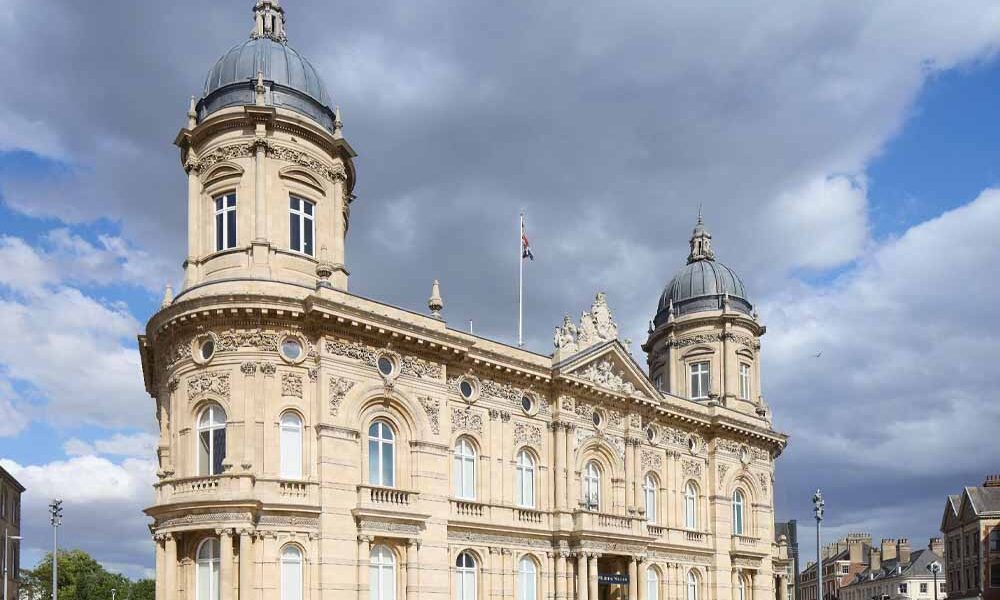
The museum occupies the former Town Dock Offices, the magnificent Victorian building opposite the Ferens Art Gallery. When it opened in 1871, ships still passed directly in front of its windows. The docks became Queen’s Gardens, but the building remained one of the clearest reminders that Hull was shaped by the sea long before its modern roads and shopping streets appeared.
The redevelopment has doubled the amount of space open to visitors and increased the number of objects on display by half. Around 1,300 exhibits will now tell more than 800 years of Hull’s relationship with fishing, shipping, migration, exploration and international trade.
Some will be familiar to generations of local families. Others have spent years in storage and will be seen by the public for the first time.
Erik the polar bear is back after becoming one of the museum’s most memorable exhibits during more than 40 years on display. Captured in the Arctic by the crew of a Dundee whaling vessel during the 1860s, he now stands in a glass case which allows visitors to walk around and see him from every side.
The museum’s enormous whale skeleton has also returned, although it is now presented very differently. The 40ft skeleton of a North Atlantic right whale has been conserved and suspended as if swimming through the main gallery.
Children and sufficiently adventurous adults can crawl through a tunnel and emerge inside a viewing dome beneath its ribcage. Other interactive exhibits allow visitors to handle a traditional harpoon weight, navigate with a compass and operate a model steam engine.
A new ten-minute planetarium experience recreates the night sky above Hull and the northern hemisphere. It explains how sailors found their way across oceans using stars and constellations centuries before satellite navigation made it possible to argue with a calm electronic voice instead.
The displays do not treat Hull’s maritime history as one long heroic adventure. Fishing and whaling created employment, wealth and international connections, but both were dangerous and frequently brutal industries. The new galleries explore the people who went to sea, the families who waited for them and the communities built around the docks.
Hull’s whaling collection includes scrimshaw, the carvings and decorated objects created from whale bone and teeth by sailors during long voyages. The museum is believed to hold one of the largest collections outside the United States, including intricately engraved teeth, painted whale earbones and scenes of Arctic hunts.
Other objects connect Hull with stories far beyond the Humber. There are items carried on Sir Ernest Shackleton’s Endurance expedition to Antarctica, a wooden canoe discovered beneath the city during construction work at the Guildhall in 1908 and the carved dog figurehead from the Sirius.
In 1838, the Sirius became the first steamship to cross the Atlantic entirely under steam power. Its figurehead is a reminder that Hull’s maritime collections are not simply of local interest. They form part of the wider history of exploration, trade and the technological changes which connected continents.
Visitors will also be able to enter areas of the building which were previously closed to the public. The second floor now includes a hidden treasures gallery, while a new community exhibition space will give local organisations an opportunity to present objects, films and stories connected with life on and around the sea.
The renovation has restored much of the character of the Grade II* listed building while adding lifts, improved wheelchair access, accessible toilets, a café, a shop and modern exhibition facilities. The architecture is now part of the visit rather than simply the container for the collection.
The £20.4 million cost was met through £11.8 million from Hull City Council, £7.7 million from the National Lottery Heritage Fund and around £900,000 from private donations.
It forms part of the wider £70 million Hull Maritime programme, which also includes the restored Spurn Lightship, the redevelopment of Queen’s Gardens, new storage and conservation facilities and the future return of the Arctic Corsair to a permanent home at North End Shipyard.
The years of fencing, diversions, delays and building work have required patience from residents. The result is intended to give Hull a collection of connected attractions capable of bringing more visitors into the city while properly preserving the history which made it.
For families in Beverley and across the East Riding, the museum also provides something more immediately useful: a substantial new free day out in the centre of Hull. It has enough large exhibits and interactive features to interest children, while the building and collections reward anyone prepared to spend a little longer looking around.
The opening weekend may already be fully booked, but this is a permanent museum rather than a one-off event. Anyone who would prefer to avoid the first rush can reserve a free visit for a later date.
Free tickets can be booked at the Hull Maritime Museum booking page. More information about opening hours, access and facilities is available from Hull Maritime.